Apple has been on the market for many years, which has given accessory makers time to come up with all kinds of useful add-ons that improve, protect and charge the iPhone, iPad and MacBook.
There are so many Apple accessories on the market that we can't go through them all, but in this guide we point out some of the products that we think are among the best accessories you can get for your iPhone.
If you want to be sure, look for MFi
Makers of mobile phone accessories can't all be lumped together. That's because Apple offers a licensing programme called MFi, short for Made For iPhone/iPad/iPod. It is a badge that Apple allows manufacturers in the programme to display on the packaging of their accessories for iPhones, iPads and iPods. Its purpose is to tell consumers that the product is an official accessory for the iOS device shown.
Not sure whether an accessory is MFi-certified,
or want to make sure that genuine or top-quality parts for iPhone / iPad / iPod will be used?
Contact appleguru.cz
This is what the licensing programme's badge looks like; it tells you that you are buying a fully compatible accessory for your iPhone.
So if you buy an accessory with the MFi badge, you are guaranteed maximum compatibility and one hundred per cent functionality. And because the manufacturer will be duly proud of this certification, you needn't worry about missing it on the product packaging. That is also because obtaining the badge costs the manufacturer something.
That is also why accessories with this badge are a little more expensive than Chinese copies, but as a rule still cheaper than official Apple products. If we look at just the Lightning charging cable, for example, Apple sells the one-metre version for 590 Kč, whereas one covered by the MFi licensing programme can be had for as little as 180 Kč, and a Chinese copy can be found all over the Czech internet for as little as 89 Kč. That one, however, also comes with considerable problems.
Official Apple products and their copies
For the past several years Apple has been campaigning against non-genuine and uncertified accessories as hard as it can. One side of the coin is that it is, of course, losing money – it sells neither its own product nor its partner's, and a no-name manufacturer lines its pockets. But that needn't bother the ordinary user. What matters to them, after all, is that things work. And that is where there can be trouble.
In the picture you can see a genuine Apple Lightning cable. You can tell a non-genuine one from it at first glance. Just look at the Lightning connector, which on Chinese copies is often made up of two parts.
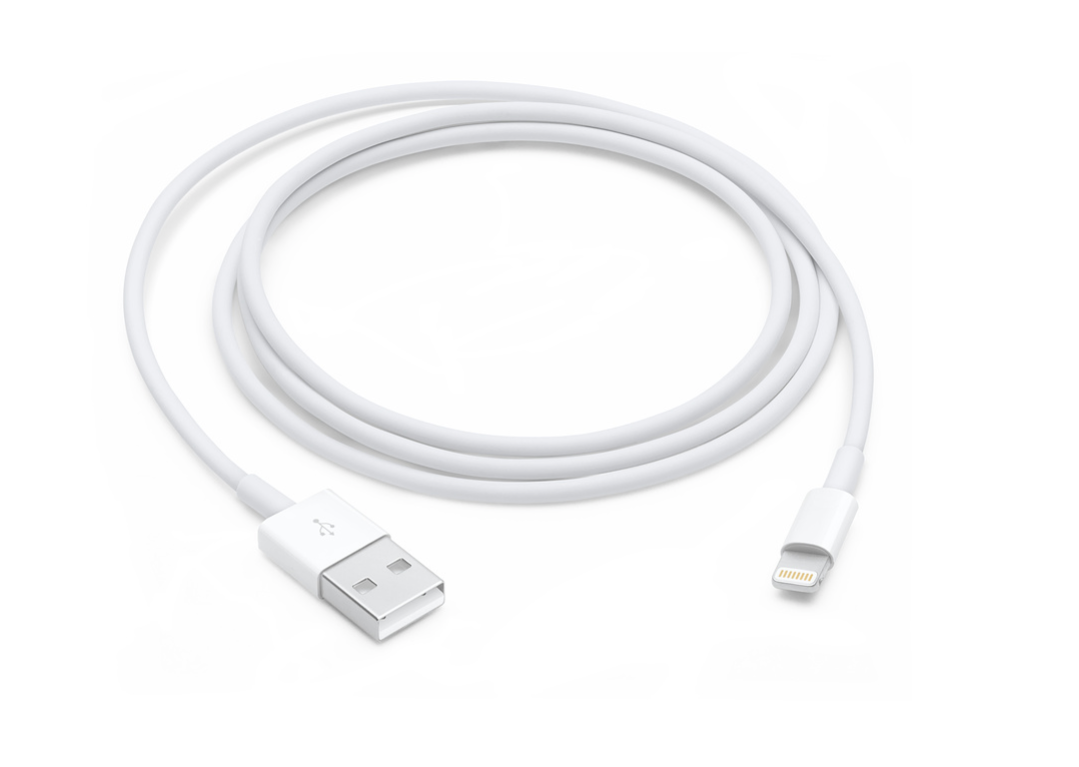
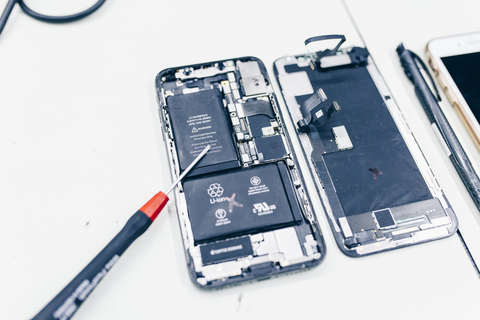
A non-genuine and unlicensed AC power adapter and Lightning cable can cause damage to the battery of Apple devices. And it needn't be just excessive heating that reduces the battery's capacity. The battery may also swell, catch fire or, in an extreme case, explode. Batteries are, after all, the Achilles heel of modern technology, and Apple naturally has its problems with them too.
Fortunately, incidents in which a mobile phone's battery has exploded are not all that common. Not long ago, however, Apple investigated one that happened to a girl from California who was only 11 years old. Her iPhone 6 quite literally blew up. She was reportedly just watching YouTube videos on the phone when it began to throw sparks and then to smoulder. Keeping her presence of mind, she threw it away at once, and only then did a minor explosion follow. Apart from the total destruction of the device, it also left a blanket and the bed scorched. The girl suffered only a minor burn to her hand.
The girl's mother contacted Apple straight away, and the company asked for the burnt phone to be sent in, in exchange for a brand-new one. It also mentioned the possible factors that caused the fire and the explosion. First and foremost, the culprits are any unauthorised repairs, a non-genuine charger or charging cable, or a faulty battery itself, which may have exploded as a result of overheating.
Blocking in iOS
To prevent exactly this, Apple tries to block the use of non-genuine and unlicensed accessories in software. So if you connect a “Chinese” copy of an accessory to an Apple phone, tablet or media player, an alert may appear on the display saying that the accessory is not supported.
Spare your nerves, pay a hundred crowns more and get a Lightning cable with an MFi licence instead.
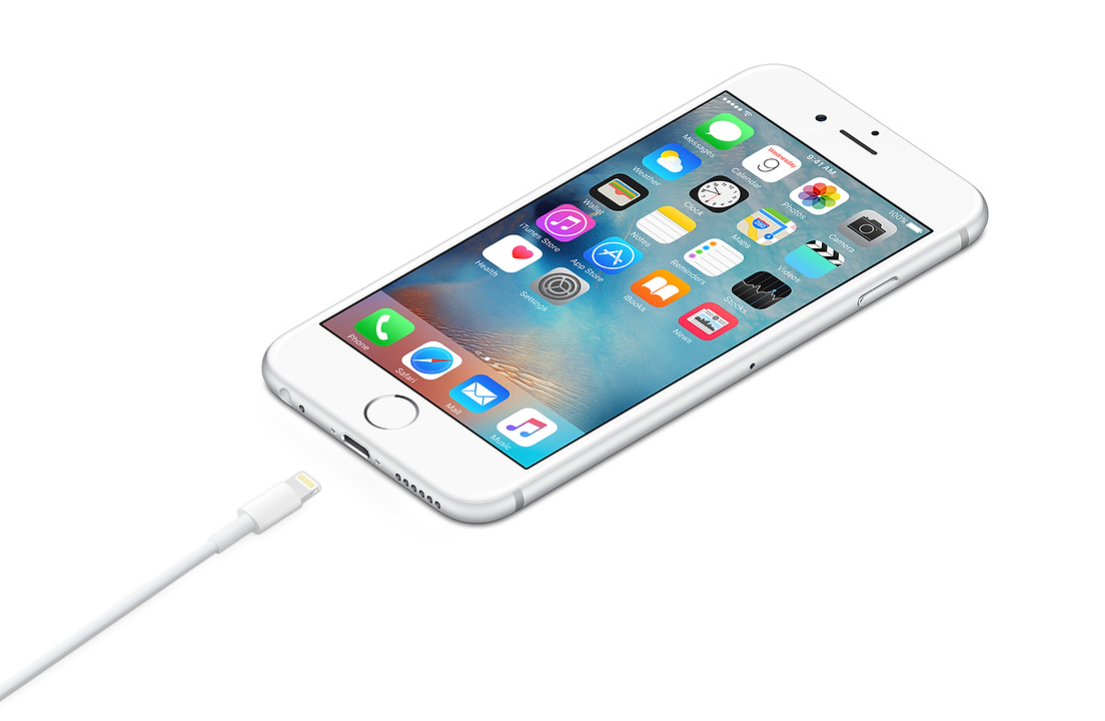
You can, of course, try unplugging the cable and plugging it back in – the alert may go away. But if it keeps appearing, even when you use an official Apple product for instance, check whether the connectors on the accessory or on the device are damaged or clogged. Then, if need be, carefully remove the dirt and clean the connector.
If the accessory is, say, an external microphone, which also plugs into the Lightning connector of an iOS device, check as well whether an operating system update is available. An update can add compatibility for the accessory.
With non-genuine and unlicensed accessories, though, you probably won't get anywhere. So if you thought you were saving money when you bought one, you have in fact thrown your money down the drain. Apple devices are rather too expensive as toys for you to have to scrimp on their accessories. In this respect it certainly pays to spend a few crowns more and buy trouble-free accessories. Even if you don't save your money, you will at least save your nerves.
If you need advice – contact appleguru.cz